
Episode 84: Everything You Want to Know about Temple University’s Farm to Families Program
About the Podcast
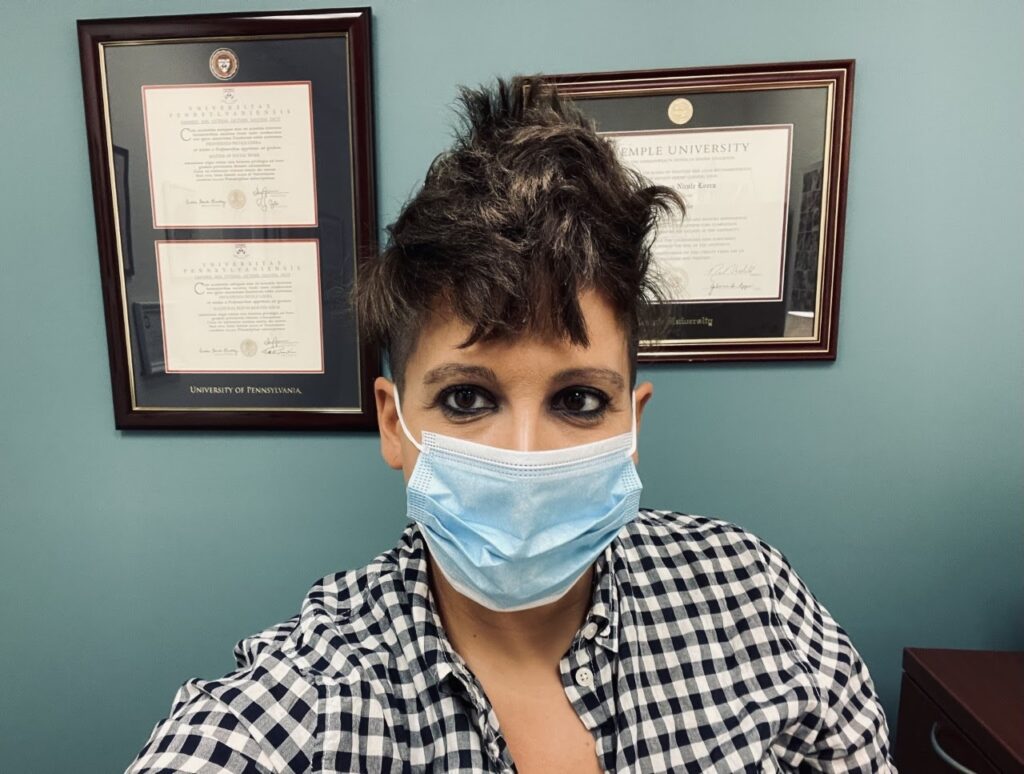
Providenza Loera Rocco is an assistant professor at the Center for Urban Bioethics at Temple University Lewis Katz School of Medicine. In her community-based programs and research, she works to highlight the systemic injustices that have prevented thousands from freely enjoying healthy food options. She brings attention to health inequities and puts community-driven solutions at the forefront through her Farm-to-Family program.


About Providenza Loera Rocco
Providenza Loera is committed to highlighting the systemic injustices that have prevented thousands from freely enjoying healthy food options. Her work focuses on bringing attention to health inequities and discussing realistic, community-driven solutions. Enza has made a life-long commitment as an ally to learn accurate history and work to identify, dismantle, and decolonize systems of oppression that continue to devalue and limit opportunities for growth in dense, disparate, and urban places like North Philadelphia. During the height of the COVID-19 pandemic, when food insecurity peaked as supply chains were stressed, Enza’s training as a social worker enabled her to address nutritional scarcity and connect individuals in Philadelphia and in counties surrounding Philadelphia with food and other life-sustaining supplies including baby formula, dog food, and diapers. Enza currently serves as Assistant Director of the MA in Urban Bioethics program and is also an Assistant Professor in the Center for Urban Bioethics at Temple University’s Lewis Katz School of Medicine. The Center for Urban Bioethics is committed to addressing and ending health disparities through education, research, and community partnerships.
By training, Enza is a social worker (MSW ‘09, University of Pennsylvania School of Social Policy & Practice), bioethicist (MBE ‘09, University of Pennsylvania Perelman School of Medicine), and lawyer (JD ‘12, Temple University Beasley School of Law). She has the honor of teaching ethics to a variety of students at Temple including medical students, physician assistants, residents, physicians, social workers, therapists, dental residents, and dental students. She also is a lecturer at Simmons University School of Social Work and Drexel University’s Health Science Administration Program.
With over 18 years of non-profit and community-based work, Enza’s impact has been felt by individuals, communities, and organizations throughout the Philadelphia region. She spent five years as a geriatric social worker and helped to found and lead an age-in-place initiative in Wilmington, Delaware. An encounter with an older adult’s confusion about medical documents (despite the client’s signature on all of the documents indicating her physicians had obtained her consent for an upcoming procedure) inspired Enza’s academic and research focus in legal and ethical issues in end-of-life care and led her to pursue degrees in bioethics and law in order to understand better approaches to empowering individuals to have as much autonomy as possible during end-of-life planning.
Since 2017, Enza has been working with Farm to Families, a food insecurity program out of the Center for Urban Bioethics and the St. Christopher's Foundation for Children that brings organic, local fruit and vegetables to North Philly residents at low- or no-cost. In 2020, she became the program director for the Farm to Families program and manages an essential group of volunteers who assist with F2F. Since 2019, Enza has been actively involved in PHA Cares, a community-based partnership with the Philadelphia Housing Authority, where she leads a team of medical student volunteers, helps to create community education materials, and provides educational support to community health workers. She is also a member of the Philadelphia Consortium of Bridging the Gaps and serves as Temple’s program director; in this role she maintains community partnerships for health science, medical, nursing, occupational therapy, and pharmacy students and has also served as an academic and community preceptor. Enza is a certified national healthcare ethics consultant and serves on Temple University Hospital's Ethics Committee, as well as a variety of other committees.
Discussion Takeaways
- Enza teaches in North Philadelphia and around Temple University. This area is classified as a food apartheid because there has been years of systemic destruction of access to healthy food and other resources through unjust policies. In these types of areas, we often see widespread poverty.
- Community-driven solutions and systematic change is needed. In order to do so, we must speak directly with the community members who want to help and be helped. If we don’t do this - health professionals, hunger fighters, and researchers - can do harm to communities, even if intentions are good.
- Community-based programs should build on people’s love to cook and empower them.
- Sit with the discomfort that hunger is a solvable but complex problem, and there is no one right solution. In your discomfort, get to know your surroundings, understand underlying issues, and jump into work wherever the community leads you.
- Enza tries to teach her students practical bioethics. Her projects relate to food and healthcare access. Though she provides her students with theories behind these issues, she also wants them to understand the public health lingo in order to fight the tangible issues people are facing daily. Knowing how to talk the talk is valuable, but then understanding how to implement these concepts to fight for policy and make systematic changes, is that much more powerful.
- Urban bioethics works to maximize patient or client self-sufficiency. As food and health pros, we must acknowledge that people want to be healthy. We don’t want to provide prescriptive diets and take away their autonomy. Instead, we need to increase access to food so folks have actual choices. The intersection of so many other factors that impact a person’s health are also important. Keeping all these issues in mind can help us all discover the best avenue to provide good food and healthcare for all.
- Food as medicine programs should be done everywhere, and insurance companies should help to cover these programs.
- Healthcare professionals must be trained in a way that’s both empathetic and understanding, but also informed. They need to know where to send their patients to get access to things they need most.
- Food insecurity exists amidst many different issues. That’s why, it’s incredibly helpful to have an interdisciplinary team to look at this issue from a variety of perspectives. Everyone can weigh in.
- What gets measured, gets done.
- Any healthcare professional should be well versed in how to address food insecurity. They should be able to empower the patients to get the help they need.
- Hunger is manmade.
- The hope is to lift people out of poverty enough, so they never have to face a food emergency. We don’t want food pantries to exist forever. We need to reimagine the charitable food system.
- Look at the community you’re in, see what programs are working. Help them out.
#1 tip to improve access to healthy food
Sit with the uneasiness that hunger shouldn’t be an issue in the United States, but it is. Then figure out what you can do about it.

Each week on the Food Dignity® Podcast, the Food Dignity® Movement's Clancy Harrison hosts a wide variety of hunger experts and other people making changes on the frontlines. Join us as we dive deep into conversations that will change the way you think about food insecurity.
Listen to our trailer!
Want to learn more about how we might work together?
Fight hidden hunger by becoming a
Food Dignity® Champion and take the HIDDEN HUNGER PLEDGE >
