
Episode 142: Food and Basic Needs Security Protects Our Youth
About the Podcast
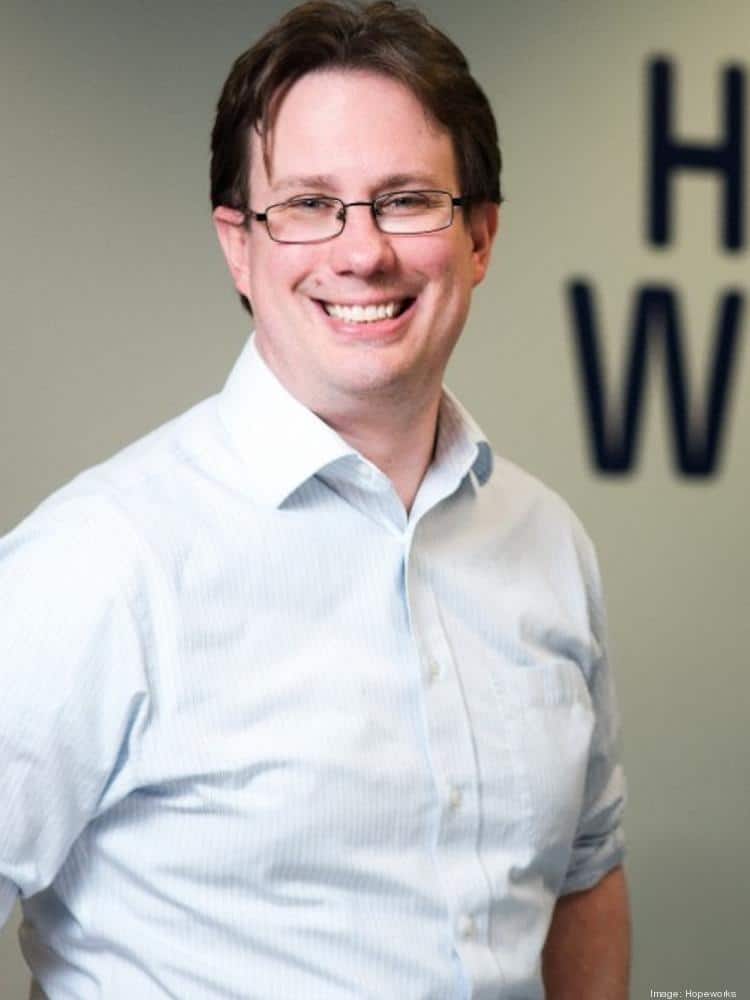
In this episode, Clancy asks Dan Rhoton, Executive Director of Hopeworks, some hard questions about how food insecurity is linked to human trafficking. He knows this issue all too well in his work leading an organization focused on providing underprivileged youth with business acumen and social entrepreneurship skills. Through the combination of education and technology, Hopeworks hires at-risk youth to build professional web design and development skills so they can get back in school, earn permanent jobs, and achieve their highest potential.


About Dan Rhoton
Dan Rhoton is Executive Director of Hopeworks. Under his leadership the organization has had the best ever youth, business, and social enterprise outcomes. Through the combination of education and technology, Hopeworks hires at-risk youth to build professional web design and development skills so they can get back in school, earn permanent jobs, and achieve their highest potential.
During his tenure, he has worked to increase the revenue of his organization from to a multi-million-dollar organization. His work has received countless awards from the 2016 South Jersey Nonprofit of the Year, the Greater Philadelphia Chamber of Commerce 2016 Nonprofit of the Year, the 2017 Scattergood Innovation Award, and the global 2022 "Special Achievement in GIS Award”.
Discussion Takeaways
- The goal at Hopeworks is to get unemployed young adults, ages 17-27, out of poverty. They do this by training them in various technical skills from Global Information System mapping, web development, and data analysis. More importantly, staff also focuses on growing their professional, social, and emotional skills for work.
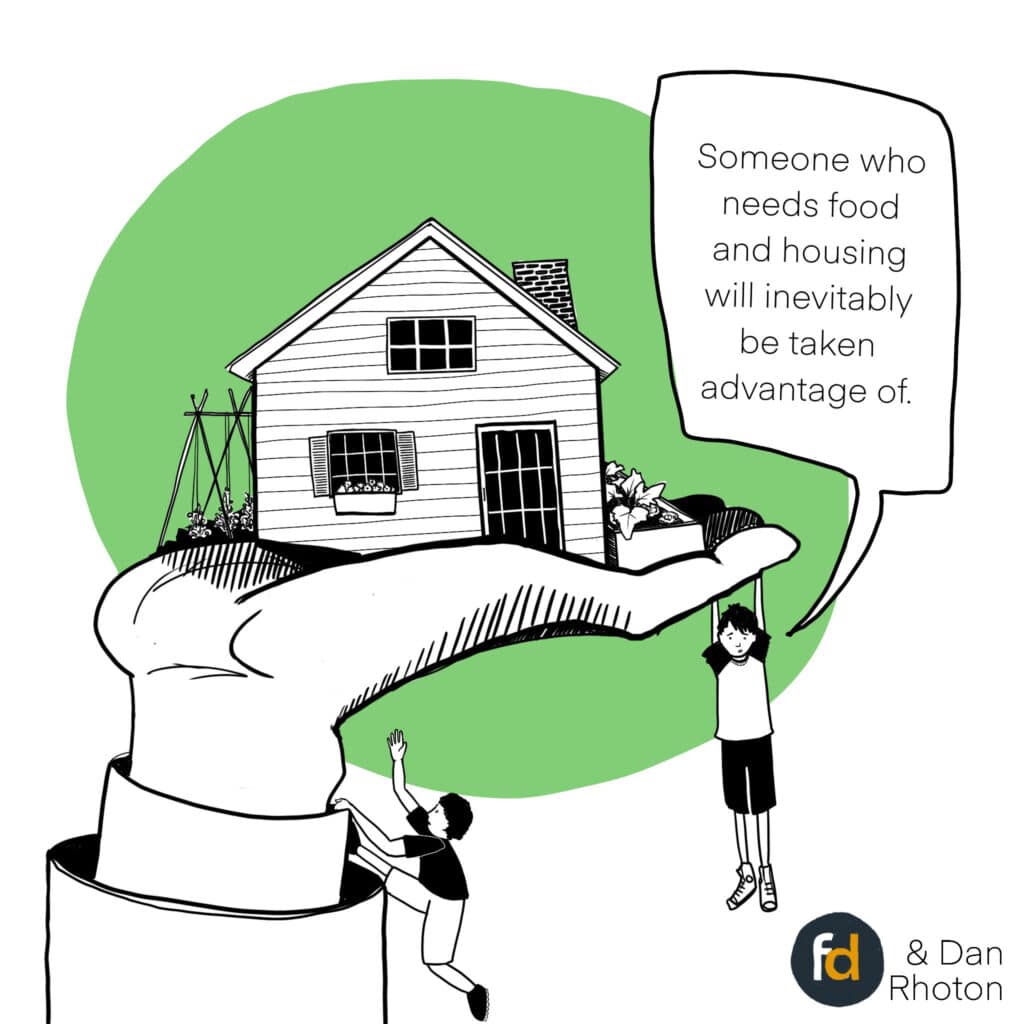
- Food and housing insecurity makes room for a provider to groom young adults for human trafficking. Dan sees this issue in many people starting Hopeworks programming. Oftentimes, people taking advantage of the young adults deliberately make it shameful for the youth to ask for help. So the biggest thing that Hopeworks initially focuses on is ensuring that all their participants have food and shelter. If participants are being taken advantage of, Hopeworks gives them these things so they have power to get away. If participants have yet to be taken advantage of, Dan’s organization protects them from that kind of treatment.
- If the process to apply for help is complicated and shameful, which is so often the case to attain food, financial or other government supports, people don’t do it.
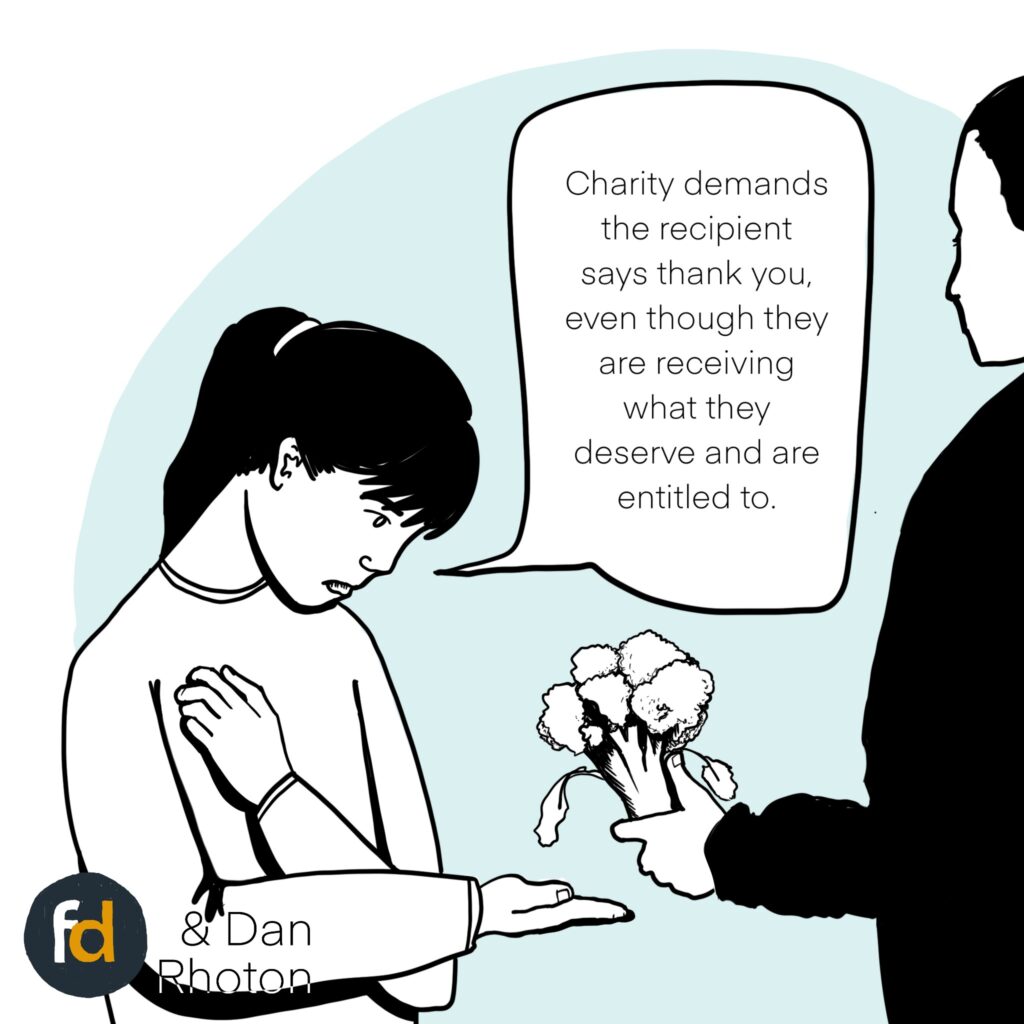
- We make people ask for help and say thank you for the things that all people deserve to have. We shouldn’t make people ask for the items that we know they need to survive.
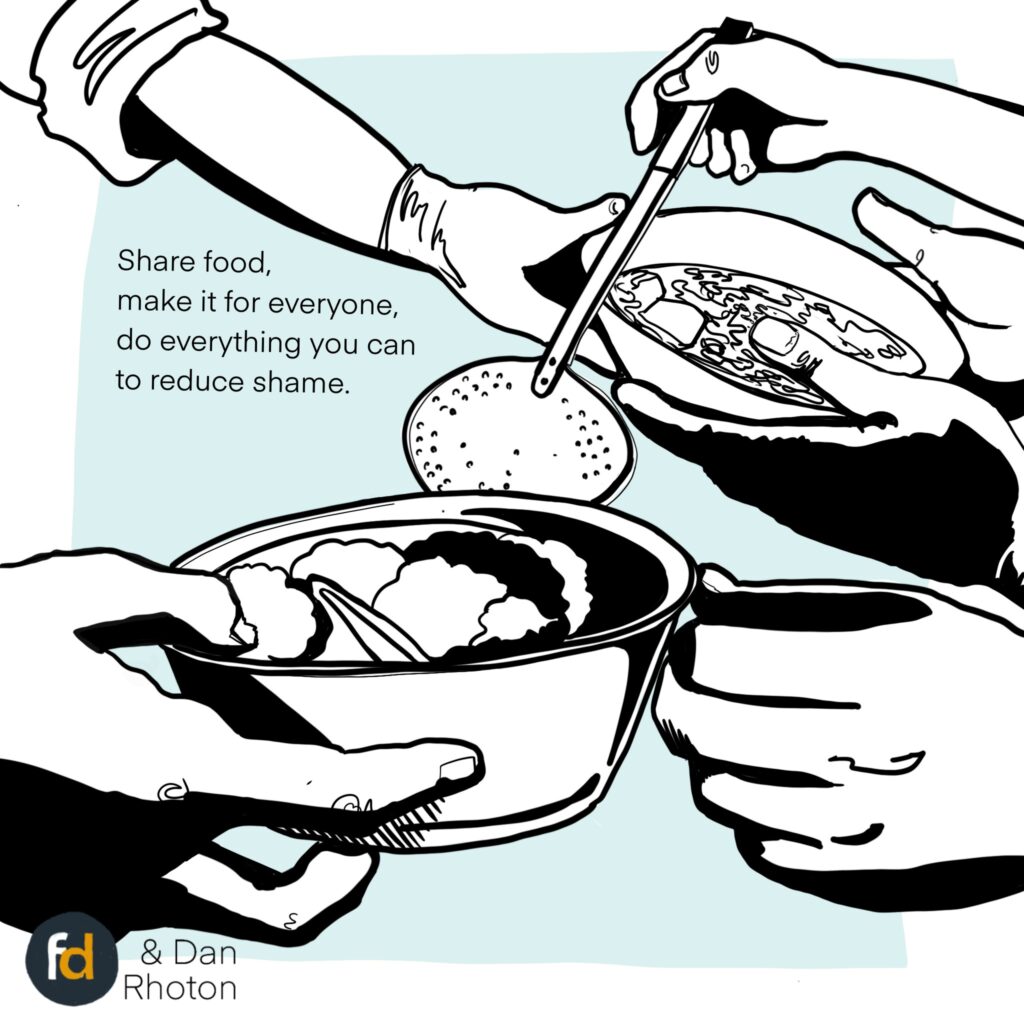
- Shame is one of the most toxic things people can experience.
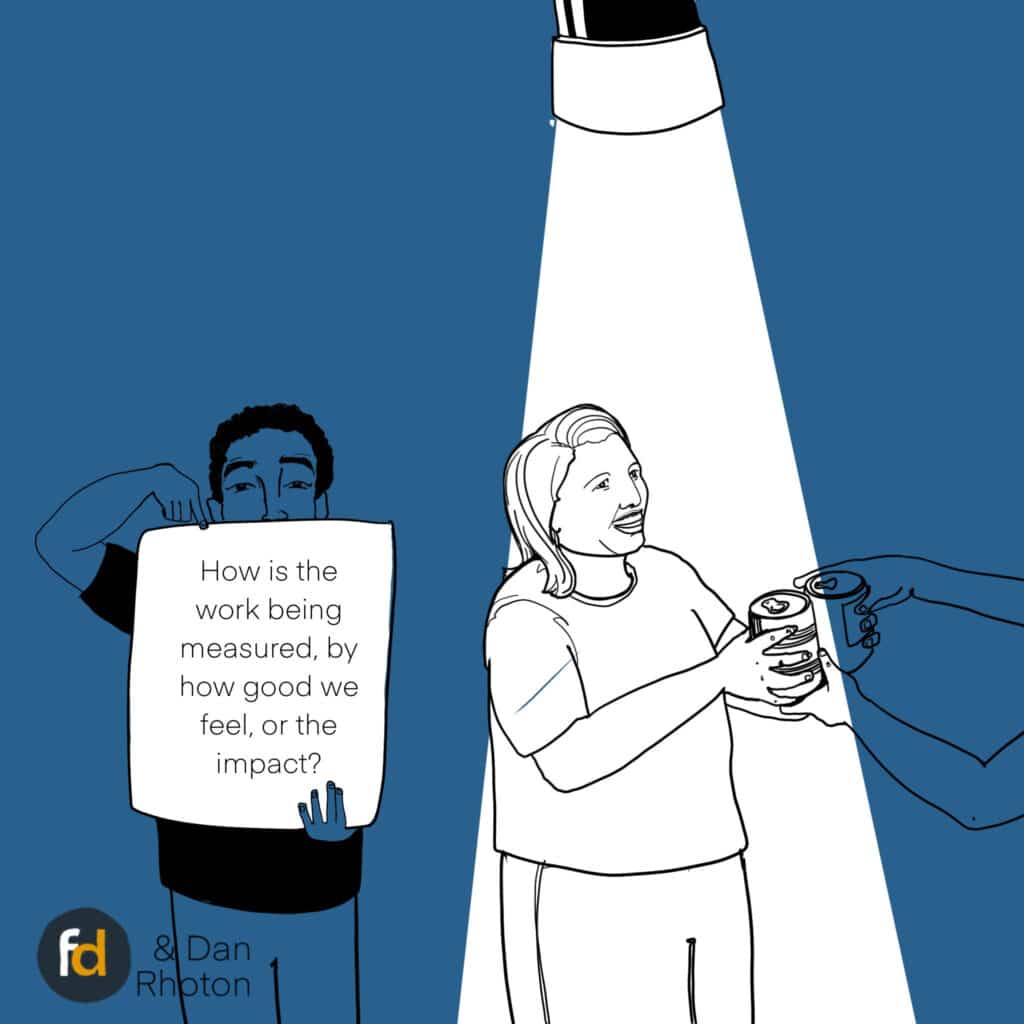
- If your goal is to be a good person, that looks different than the goal of putting food into the hands that need it.
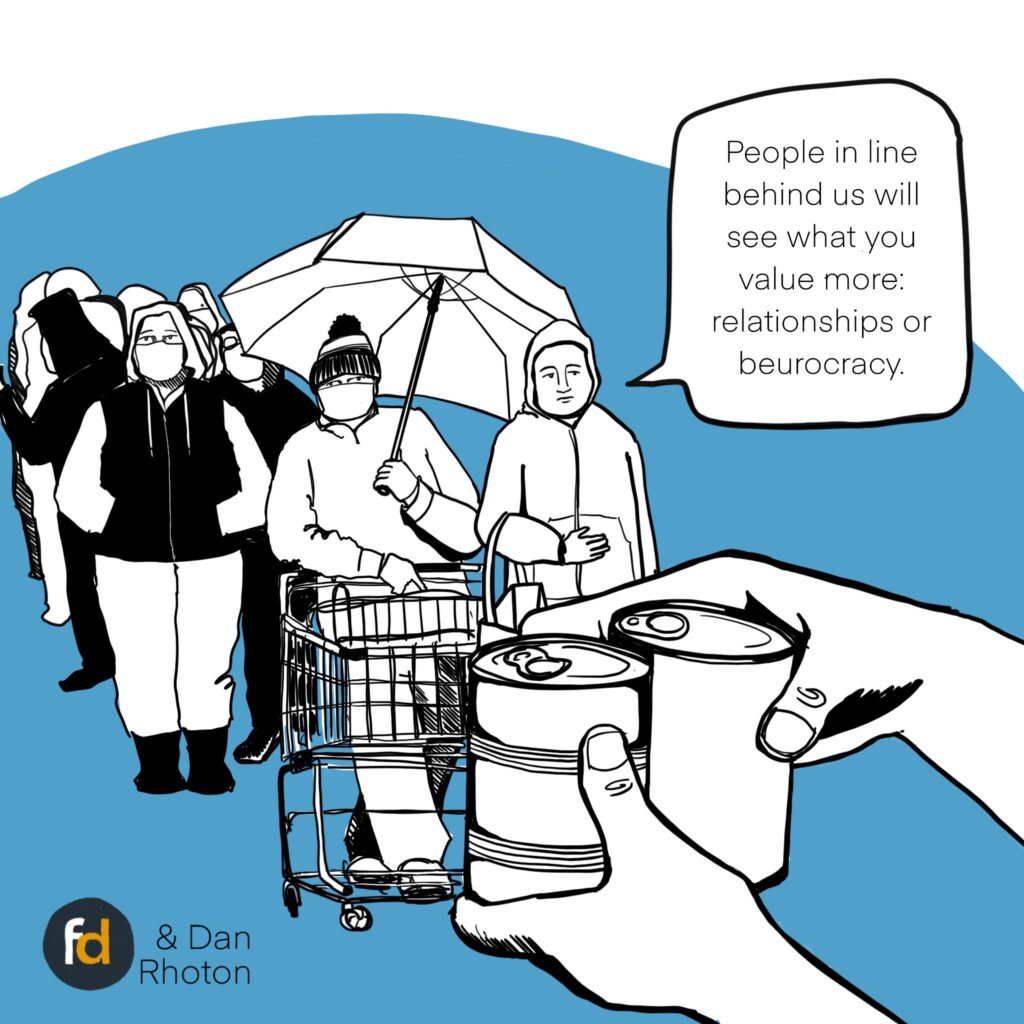
- Poverty does not have to be a complicated problem. When you make a living wage, you eliminate large amounts of issues associated with not having enough. When people have more money to get what they need, things get better. Dan lives this out at Hopeworks every single day.
The beautiful images above were created by Rebecca Garofano, our Food Dignity Institute Lead and Illustration Specialist. You can find more of her work at @VeggieDoodleSoup on Instagram and at her website veggiedoodlesoup.com.
#1 tip to improve access to healthy food
- If someone is hungry, unsafe or unhoused. They will not successfully fulfill their work. If you meet their basic needs, that will likely fix their lack of productivity.


Each week on the Food Dignity® Podcast, the Food Dignity® Movement's Clancy Harrison hosts a wide variety of hunger experts and other people making changes on the frontlines. Join us as we dive deep into conversations that will change the way you think about food insecurity.
Listen to our trailer!
Want to learn more about how we might work together?

Fight hidden hunger by becoming a
Food Dignity® Champion and take the HIDDEN HUNGER PLEDGE >
