
Episode 131: Inside School Food
About the Podcast
Two guests take on the spotlight during this episode! Stephen Menyhart is currently a nationally-renowned registered dietitian, chef, and has managed school foodservice programs across the U.S. at a director level. And Nels Thoreson is an English teacher, football coach, and person charged with serving lunch at Justice High School. Together, they are taking a stand for school foodservice programs across the nation.


About
Stephen Menyhart has a Bachelor of arts in Inner City Studies Education from Northeastern Illinois University, an Associates degree in Culinary Arts, and a Bachelor of science degree in Culinary Nutrition from Johnson & Wales University. It took him 9 years to complete his initial bachelor’s degree, working full time throughout as a line cook in high end restaurants in Michigan, Chicago, and the City of London. At age 35 with his wife, 3-month-old son, and 2-year-old daughter in tow, he went back to school to become a Registered Dietitian and continue to progress within his chosen field of School Nutrition.
Stephen has taken on the Director of Foodservice positions at Boulder Valley School District and in Watertown, Massachusetts. He also was a chef, culinary trainer and classroom teacher within Chicago Public Schools.
The original lucky break that helped Stephen transition from being a “dirtbag line cook” into a “School Nutrition Professional” was the opportunity to teach a cooking class in the Uptown neighborhood of Chicago at a school for recent immigrants. The curriculum was called “Food is Elementary”, a vegan global cuisine curriculum designed by Dr. Antonia Demas out of the Food Studies Institute at Cornell University. He taught an 8-week course with his wife, who was an Americorps member at the school at the time, and a local physician covered the food costs for the class. He’s never looked back.
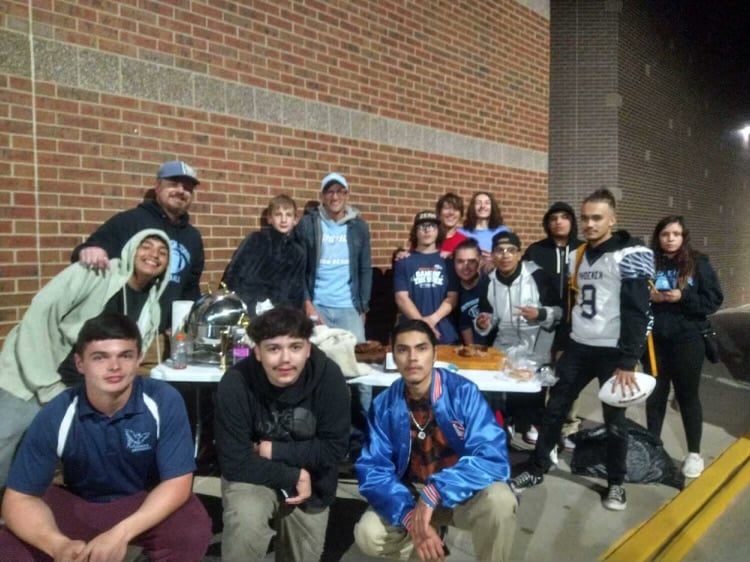
Nels Thoreson is an English teacher, football coach, and person charged with serving lunch at Justice High School in Lafayette, Colorado. He works at a charter school in one of the wealthiest school districts across the nation. But in his school, 93% of the kids are economically disadvantaged and struggling to stick with their educational journey. Nels makes it his mission to ensure these kids have a role model, trusted caregiver, and friend so they can beat the odds and graduate.
Discussion Takeaways
- Boulder Valley School District in Colorado serves 28,000 students. It spans 500 square miles and 56 schools. Justice High School is in one of those schools with students in the lowest income brackets. It’s a public charter school for those who didn’t fit into the classic high school model.
- Stephen Menyhart ensures all school students across the district have solid, nourishing food options. He does this by purchasing food locally and abroad, hiring the right staff for the job, organizing this massive food service operation, and ensuring that every kid is fed and satisfied. Nels is an English teacher at Justice High. He uses class time to ask his kids to express their emotions surrounding their economic, social and living circumstances in writing. Through this exercise, he finds that most kids will share some of their tough life experiences. He’ll utilize their stories to advocate for the students, fundraise, protect them, and notify law enforcement when necessary. The students trust him, and the whole school feels like family to Nels. He’s also a football coach of a ten-player team. He plays this role mostly to keep kids out of the streets. Lastly, he is the self-proclaimed “lunch lady” that makes sure his students get fed well. Stephen and Nels combine their efforts to ensure all kids are happy, safe and healthy.
- During COVID, the district was able to create a complex meal planning matrix. They served 50-70 bagged lunches for each student every week. Community liaisons knew every family, spoke their language, and provided these food deliveries.
- Healthy, free school meals for all falls under a policy known as “Universal School Meals”. Among other things, like a bookbag or clean clothes, food is an essential tool kids need to be successful in their educational journey. The goal of this approach is to provide free school meals for every student in order to eliminate the stigma and shame of those who have to get government-supported free and reduced-priced meals. It also reduces the risk of kids missing meals, especially for those on the brink of qualifying for these programs. Currently, this idea is being implemented on a state-by-state basis because the federal government chose not to pass the bill.
- More research needs to be done on how school lunch is preventative care and reduces health costs.
- The school district has a $4 million dollar food budget. $1 million of that is spent in-state and allows the district to make small, autonomous purchasing decisions. Some locally sourced food products include:
- Beef from Legacy Meats
- “Olathe Sweet” Sweet Corn from the Tuxedo Corn Company
- La Casita Tamales
- Western Slope peaches
- Apples, including a unique breed called Colorado Orange apples
- Dried beans
- Local food purchases are actually hugely advantageous. Surrounding farmers, ranchers, and food producers have the potential to make higher quality food at a cheaper rate than the school foodservice facility. Paula Sandobal’s La Casita Tamales is the perfect example of this. They prepare the tamales offsite for reheating at the schools.
- There is major psychological distress associated with food insecurity. It’s a tough balancing act to feed one’s family well. It's frustrating to deal with the high cost of basic needs, stigmatizing to use community resources, sad to think about chronic food shortage situation, and guilt-producing when people can’t make ends meet.
- Student cooking classes are provided by Justice High School’s Assistant Principal. He does this, so kids can prepare food for themselves and potentially their whole family. Very often, the students come home and need to contribute because their caregiver is at their second or third job, might suffer from addiction which stops them from serving in the parenting role, or cupboards are bare until kids bring home items from food bank.
- Most students at Justice High also work to help pay their families’ rent or food cost. They have full-time work while going to school.
#1 tip to improve access to healthy food
- Nels and Stephen claim that they give as much as they get from the students across the Boulder Valley School District.


Each week on the Food Dignity® Podcast, the Food Dignity® Movement's Clancy Harrison hosts a wide variety of hunger experts and other people making changes on the frontlines. Join us as we dive deep into conversations that will change the way you think about food insecurity.
Listen to our trailer!
Want to learn more about how we might work together?
Fight hidden hunger by becoming a
Food Dignity® Champion and take the HIDDEN HUNGER PLEDGE >
