
Episode 115: The Clinical and Community Connection
About the Podcast
Overall health is impacted by much more than our health care system, and hospitals everywhere are starting to support the environmental, physical, emotional, and other factors that go into their patients’ wellbeing. Finding new and innovative strategies to support individuals in reaching their highest potential, including food access is key. Learn more about these strategies during Clancy’s back-and-forth with Maureen McCoy, Registered Dietitian and Senior Lecturer in the College of Health Solutions at Arizona State University.


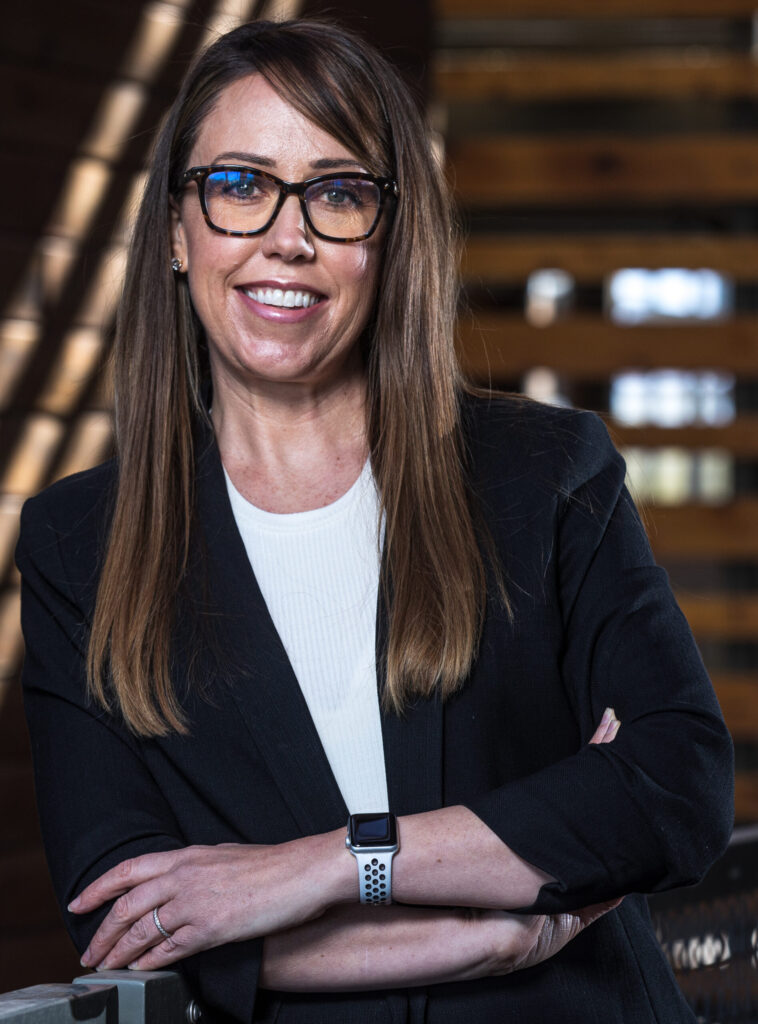
About Maureen McCoy
Maureen is a Registered Dietitian and Senior Lecturer in the College of Health Solutions at Arizona State University (ASU). Here, she is the Degree Director for the Food and Nutrition Entrepreneurship Bachelor of Science and Bachelor of Applied Science degrees. One of her true passions is serving as the faculty advisor for the Pitchfork Pantry, food pantry for ASU students. With this group, she works with external partners to bring food and resources closer to campus for students who lack transportation and money to purchase these items. The pantry has expanded from a small space serving non-perishable food items to a few students in a week, to a larger operation serving perishable food, hygiene items and cleaning products in weekend pop-up markets to hundreds of students. Prior to coming to ASU, Maureen worked as a sports dietitian, as a school food service dietitian, and as a community dietitian where she still consults with Maricopa County Head Start and oversees the Child and Adult Care Food Program (CACFP). Maureen serves as the Professional Development Coordinator for the Arizona Academy of Nutrition and Dietetics and is a board member on the Arizona Chapter of the American Academy of Pediatrics. She is a member of the Higher Education Food Security Coalition investigating new ways to expand food access to students and the surrounding community.
Discussion Takeaways
- Maureen speaks about the medical system being able to refer patients to a food as medicine program at their local food bank. The food bank staff asks participants to select a certain amount of food out of colored bins which represent each of the five food groups ( red for fruits, green for vegetables, purple for proteins, blue for dairy, and orange for grains). As people pick healthful options on a regular basis, their lab values associated with diabetes and other health-related issues are being reduced drastically.
- Rather than providing nutrition education or motivational interviewing, maybe health professionals just need to offer foods and allow patients to choose the nourishing food they’ll actually eat.
- Is the hospital the ideal place to receive one-time nutrition education? Does this have an impact on someone’s long-term health outcomes?
- Wraparound care in the hospital can look like a nutrition education within the hospital tagged onto a referral to the drug pharmacy and a food access program for the food insecure.
- Data needs to be collected to prove that food as medicine programs work.
- There needs to be a food security action plan for medical professionals and their patients. Teaming together allows everyone to move forward productively.
- Without an understanding of the social determinants of health or the full picture of patients’ life, how can the medical system truly prevent disease, take care of their patients effectively, and reduce medical costs?
#1 tip to improve access to healthy food
- All systems, organizations, companies, individuals, etc. need to think how we can work together to take away barriers to making the healthy choice the easy choice.

Each week on the Food Dignity® Podcast, the Food Dignity® Movement's Clancy Harrison hosts a wide variety of hunger experts and other people making changes on the frontlines. Join us as we dive deep into conversations that will change the way you think about food insecurity.
Listen to our trailer!
Want to learn more about how we might work together?
Fight hidden hunger by becoming a
Food Dignity® Champion and take the HIDDEN HUNGER PLEDGE >
